1 lien privé
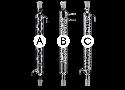
A laboratory fire involving carbon disulfide led researchers to uncover an overlooked distillation hazard and a surprising gap in how students assess laboratory risks.

This is a curated Collection designed to provide the polymer science community with authoritative, practical, and open access guidance on experimental, computational, and data‑driven approaches across the field. These Tutorials go beyond traditional reviews by offering frameworks, best‑practice recommendations, and clearly articulated workflows that support reproducibility, transparency, and efficient adoption of emerging methods.
- How to Characterize Covalent Adaptable Networks: A User Guide
ACS Polym. Au 2025, 5, 3, 214-240 - RAFT with Light: A User Guide to Using Thiocarbonylthio Compounds in Photopolymerizations
ACS Polym. Au 2025, 5, 3, 184-213 - Navigating the Expansive Landscapes of Soft Materials: A User Guide for High-Throughput Workflows
ACS Polym. Au 2023, 3, 6, 406-427 - A User’s Guide to Machine Learning for Polymeric Biomaterials
ACS Polym. Au 2023, 3, 2, 141-157 - A Practical User Guide to Stress Relaxation Spectra of Dynamic Covalent Networks
ACS Polym. Au 2026, 6, 1, 107-116 - How to Characterize Supramolecular Polymers: A User Guide
ACS Polym. Au 2026, 6, 1, 117-156 - Degradable Vinyl-Based Polymers by Radical Ring-Opening Polymerization: A User Guide
ACS Polym. Au 2026, 6, 3, 721-785
Strong reducing agents like lithium aluminum hydride (LiAlH4, LAH) are frequently employed by industry and academic laboratories in syntheses and other research applications. Due to LAH’s reactivity, several laboratory explosions and fires have been documented in the literature and on various EH&S webpages at universities. Some of the accidents were caused by incorrect handling of LAH or by improper chemical processes, such as weighing on regular paper, grinding, and creating friction, using contaminated solvents and glassware, and physically scraping the material during transfers. In many of these cases, researchers did not have access to a guidance document or an SOP for many of these incidents, and no thorough risk assessment was carried out. Academic laboratories can avoid similar accidents and associated property damage by developing a safety guidance document that identifies every facet of LAH manipulation in the experiment, including reaction setup, procedures for weighing and transferring material to the reaction vessel, heating, and cooling during the reaction, quenching the reaction, and waste disposal. This LAH guidance document can be used to produce a manipulation-specific SOP that covers best practices and precautions for a variety of substrates and reaction scales.
ACS Chem. Health Saf. 2024, 31, 2, 162–171 (10.1021/acs.chas.3c00102)
This tutorial provides the theoretical background, the principles, and applications of Electrochemical Impedance Spectroscopy (EIS) in various research and technological sectors. The text has been organized in 17 sections starting with basic knowledge on sinusoidal signals, complex numbers, phasor notation, and transfer functions, continuing with the definition of impedance in electrical circuits, the principles of EIS, the validation of the experimental data, their simulation to equivalent electrical circuits, and ending with practical considerations and selected examples on the utility of EIS to corrosion, energy related applications, and biosensing. A user interactive excel file showing the Nyquist and Bode plots of some model circuits is provided in the Supporting Information. This tutorial aspires to provide the essential background to graduate students working on EIS, as well as to endow the knowledge of senior researchers on various fields where EIS is involved. We also believe that the content of this tutorial will be a useful educational tool for EIS instructors.
ACS Meas. Sci. Au 2023, 3, 3, 162–193 (10.1021/acsmeasuresciau.2c00070)
This resource offers guidelines for safe handling of low-solubility ultrafine particles in the lab.
To explore also: