1 lien privé
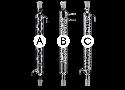
A laboratory fire involving carbon disulfide led researchers to uncover an overlooked distillation hazard and a surprising gap in how students assess laboratory risks.

This is a curated Collection designed to provide the polymer science community with authoritative, practical, and open access guidance on experimental, computational, and data‑driven approaches across the field. These Tutorials go beyond traditional reviews by offering frameworks, best‑practice recommendations, and clearly articulated workflows that support reproducibility, transparency, and efficient adoption of emerging methods.
- How to Characterize Covalent Adaptable Networks: A User Guide
ACS Polym. Au 2025, 5, 3, 214-240 - RAFT with Light: A User Guide to Using Thiocarbonylthio Compounds in Photopolymerizations
ACS Polym. Au 2025, 5, 3, 184-213 - Navigating the Expansive Landscapes of Soft Materials: A User Guide for High-Throughput Workflows
ACS Polym. Au 2023, 3, 6, 406-427 - A User’s Guide to Machine Learning for Polymeric Biomaterials
ACS Polym. Au 2023, 3, 2, 141-157 - A Practical User Guide to Stress Relaxation Spectra of Dynamic Covalent Networks
ACS Polym. Au 2026, 6, 1, 107-116 - How to Characterize Supramolecular Polymers: A User Guide
ACS Polym. Au 2026, 6, 1, 117-156 - Degradable Vinyl-Based Polymers by Radical Ring-Opening Polymerization: A User Guide
ACS Polym. Au 2026, 6, 3, 721-785
10 pratiques pour une communication publique égalitaire
Strong reducing agents like lithium aluminum hydride (LiAlH4, LAH) are frequently employed by industry and academic laboratories in syntheses and other research applications. Due to LAH’s reactivity, several laboratory explosions and fires have been documented in the literature and on various EH&S webpages at universities. Some of the accidents were caused by incorrect handling of LAH or by improper chemical processes, such as weighing on regular paper, grinding, and creating friction, using contaminated solvents and glassware, and physically scraping the material during transfers. In many of these cases, researchers did not have access to a guidance document or an SOP for many of these incidents, and no thorough risk assessment was carried out. Academic laboratories can avoid similar accidents and associated property damage by developing a safety guidance document that identifies every facet of LAH manipulation in the experiment, including reaction setup, procedures for weighing and transferring material to the reaction vessel, heating, and cooling during the reaction, quenching the reaction, and waste disposal. This LAH guidance document can be used to produce a manipulation-specific SOP that covers best practices and precautions for a variety of substrates and reaction scales.
ACS Chem. Health Saf. 2024, 31, 2, 162–171 (10.1021/acs.chas.3c00102)
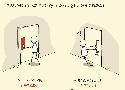
In something as fundamental to our everyday living as a door, you might think that we had nailed their design sufficiently not to misuse them. However, I'm willing to bet that, like me, you have pulled a door when you needed to push it. A common culprit is adding a bar handle to a door on the side you need to push. While a flat plate attached to the door affords only pushing, a bar handle begs you to pull it. Often, a door designed this way gets a sign saying "Push." As Don Norman says, if your design needs a label, consider another design.
The Design of Everyday Things, Don Norman, 9780262525671
Le design des objets du quotidien, Don Norman 9782212678833
via LHV
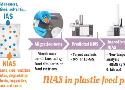
Several food contact materials (FCMs) contain non-intentionally added substances (NIAS), and most of the substances that migrate from plastic food packaging are unknown. This review aimed to situate the main challenges involving unknown NIAS in plastic food packaging in terms of identification, migration tests, prediction, sample preparation, determination methods and risk assessment trials. Most studies have identified NIAS in plastic materials as polyurethane adhesives (PU), polyethylene terephthalate (PET), polyester coatings, polypropylene materials (PP), multilayers materials, plastic films, polyvinyl chloride (PVC), recycled materials, high-density polyethylene (HDPE) and low-density polyethylene (LDPE). Degradation products are almost the primary source of NIAS in plastic FCMs, most from antioxidants as Irganox 1010 and Irgafos 168, following by oligomers and side reaction products. The NIAS assessment in plastics FCMs is usually made by migration tests under worst-case conditions using food simulants. For predicted NIAS, targeted analytical methods are applied using GC-MS based methods for volatile NIAS and GC-MS and LC-MS based methods for semi- and non-volatile NIAS; non-targeted methods to analyze unknown NIAS in plastic FCMs are applied using GC and LC techniques combined with QTOF mass spectrometry (HRMS). In terms of NIAS risk assessment and prioritization, the threshold of toxicological concern (TTC) concept is the most applied tool for risk assessment. Bioassays with sensitive analytical techniques seem to be an efficient method to identify NIAS and their hazard to human exposure; the combination of genotoxicity testing with analytical chemistry could allow the Cramer class III TTC application to prioritize unknown NIAS. The scientific justification for implementing a molecular weight-based cut-off (<1000 Da) in the risk assessment of FCMs should be reevaluated. Although official guides and opinions are being issued on the subject, the whole chain’s alignment is needed, and more specific legislation on the steps to follow to get along with NIAS.
Polymers 2021, 13(13), 2077 (10.3390/polym13132077)
One way or the other, AI tools such as ChatGPT are determined to revolutionize our lives. But how close are we to an AI-powered assistant in the chemistry lab?
Highlights:
- Extraction par ChatGPT des paramètres de synthèses (26 000 paramètres distincts pour environ 800 MOF)
ChatGPT Chemistry Assistant for Text Mining and the Prediction of MOF Synthesis
Making molecules makes a lot of organic-solvent waste, which can harm people’s health and the environment. One solution might be switching to a more benign solvent: water. But how can chemists coax greasy organic compounds to go into polar water? Mimicking nature by using enzymes is one solution. Chemists have also developed a number of tricks to make organic compounds and water mix. Doing organic chemistry in water works for organic molecules that have some aqueous solubility. On-water reactions happen at the interface between water and an organic compound. And with-water reactions rely on additives such as surfactants to entice organic molecules and water to mingle.
Highlights:
- « 3 types de méthodes fondamentales » pour amener les molécules organiques à réagir dans l’eau : in water (espèces chargées), on water (interface organique — eau), with water (micelles)
Many reactions, such as Claisen rearrangements, are dramatically accelerated when performed in aqueous suspension (“on water”) relative to organic solvents or even neat conditions. Low miscibility of organic compounds with water is not detrimental: in fact, it facilitates the isolation of products.
Angew. Chem. Int. Ed 2005, 44, 3275-3279 (10.1002/anie.200462883)
Outil du gouvernement français pour ajouter un filigrane.
Actualités, Réglementations et Outils sur les produits dangereux et la sécurité chimique.
Rappel : Ne pas oublier de consulter régulièrement le site de l’Agence européenne des produits chimiques : ECHA
EDIT : Informations complémentaires sur la réglementation REACH — Ministère de la transition écologique : https://www.ecologie.gouv.fr/reglementation-reach
This tutorial provides the theoretical background, the principles, and applications of Electrochemical Impedance Spectroscopy (EIS) in various research and technological sectors. The text has been organized in 17 sections starting with basic knowledge on sinusoidal signals, complex numbers, phasor notation, and transfer functions, continuing with the definition of impedance in electrical circuits, the principles of EIS, the validation of the experimental data, their simulation to equivalent electrical circuits, and ending with practical considerations and selected examples on the utility of EIS to corrosion, energy related applications, and biosensing. A user interactive excel file showing the Nyquist and Bode plots of some model circuits is provided in the Supporting Information. This tutorial aspires to provide the essential background to graduate students working on EIS, as well as to endow the knowledge of senior researchers on various fields where EIS is involved. We also believe that the content of this tutorial will be a useful educational tool for EIS instructors.
ACS Meas. Sci. Au 2023, 3, 3, 162–193 (10.1021/acsmeasuresciau.2c00070)
Les cahiers du débutant est un manuel simplifié francophone pour l’installation et la prise en main d’un système Debian.

Cybermalveillance.gouv.fr a pour missions d’assister les particuliers, les entreprises, les associations, les collectivités et les administrations victimes de cybermalveillance, de les informer sur les menaces numériques et les moyens de s’en protéger.
MOOC de la CNIL :
L’atelier RGPD est une formation en ligne gratuite, illimitée et ouverte à tous (Mooc). Elle permet de sensibiliser les professionnels à la protection des données et d’accompagner leur mise en conformité. Dans cette nouvelle version, la CNIL propose un nouveau module dédié aux collectivités territoriales.
https://www.cnil.fr/fr/le-mooc-de-la-cnil-est-de-retour-dans-une-nouvelle-version-enrichie
https://atelier-rgpd.cnil.fr/
MOOC de l'ANSSI :
Vous y trouverez l’ensemble des informations pour vous initier à la cybersécurité, approfondir vos connaissances, et ainsi agir efficacement sur la protection de vos outils numériques. Ce dispositif est accessible gratuitement. Le suivi intégral de ce dispositif vous fera bénéficier d’une attestation de réussite.
Configuration utilisateur ( ~/.config/yt-dlp/config)
--ignore-errors

# Download only the video, if the URL refers to a video and a playlist
--no-playlist

# Save all videos under yt-dlp directory in your videos directory
-o ~/Vidéos/yt-dlp/%(title)s.%(ext)s

# Restrict filenames to only ASCII characters, and avoid "&" and spaces in filenames
--restrict-filenames

# Do not overwrite any files
--no-overwrites

# Do not use .part files - write directly into output file
--no-part
Utilisation
- Lister les qualités et formats disponibles
yt-dlp -F Website_URL
- Sélectionner un format vidéo et/ou audio
yt-dlp -f format(vidéo+audio) Website_URL
- Vidéo intégré à un website
yt-dlp --user-agent "Mozilla/5.0 (X11; Linux x86_64) AppleWebKit/537.36 (KHTML, like Gecko) Chrome/107.0.0.0 Safari/537.36" --referer "https://website_URL" "https://iframe.mediadelivery.net/UUID/1920x1080/video.drm?contextId=UUID"
yt-dlp --user-agent "Mozilla/5.0 (X11; Linux x86_64) AppleWebKit/537.36 (KHTML, like Gecko) Chrome/107.0.0.0 Safari/537.36" --referer "https://website_URL" "https://iframe.mediadelivery.net/embed/ID/UUID"
Sources :
The time-related fields of struct stat are as follows, man lstat:
- atime: Time when file data last accessed.
- mtime: Time when file data last modified.
- ctime: Time when file status was last changed
- birthtime or btime: Time of file creation. Only set once when the file is created.
-
To modify access time (atime):
touch -a -t CCYYMMDDhhmm.SS file.txt(example: 201811251820.52 = 25 novembre 2018 à 18 h 20 min 52 s) -
To modify modification time (mtime) and time of file creation (btime):
touch -m -t CCYYMMDDhhmm.SS file.txt -
To modify only the time of creation/birth (btime):
SetFile -d "11/25/2018 18:20:52" file.txt
Copain des Copeaux :
Français :
Belge :
Allemand :
Anglais :
Américain : (Attention aux taxes et frais de port !)
Autres :
Occasion :

France Université Numérique est l’établissement public français qui opère la plateforme FUN MOOC.
Nous fédérons un réseau d’universités, d’écoles, d’instituts de recherche, d’agences gouvernementales, d’entreprises edtech et de contributeurs qui se consacrent à la construction de services numériques souverains pour l’éducation. France Université Numérique développe des outils d’apprentissage libres et ouverts, mais aussi des plateformes et services d’apprentissage sur mesure.
Des cours en ligne gratuits pour découvrir, apprendre, progresser et réussir avec des experts des meilleurs établissements d’enseignement supérieur.
Notices des produits Leroy-Somer (anciennes et nouvelles générations)